

Fri, 11 Sep
NOAA day · UTC
| Interval · UTC+3 | Forecast Kp |
|---|---|
| 11 Sep 03:00–06:00 | 2.00 |
| 11 Sep 06:00–09:00 | 2.33 |
| 11 Sep 09:00–12:00 | 2.00 |
| 11 Sep 12:00–15:00 | 2.00 |
| 11 Sep 15:00–18:00 | 2.33 |
| 11 Sep 18:00–21:00 | 2.67 |
| 11 Sep 21:00–00:00 | 2.67 |
| 12 Sep 00:00–03:00 | 3.00 |
LOOK NORTH. LOOK UP.
Murmansk & Teriberka
A little planning. A sky full of possibility.
FIND A BREAK IN THE CLOUDS
Hourly cloud cover · Moscow time (UTC+3)
Loading the cloud forecast…
Lower % means less cloud, not an aurora probability. Darkness and aurora activity still matter.
Forecast total cloud cover for the selected location, rounded to whole percentages. Tonight shows upcoming hours within 18:00–06:00 Moscow time; after midnight it continues the same night. This is a planning window, not a prediction of darkness. Conditions can vary along the route. Weather data: MET Norway, CC BY 4.0.
NOAA · 2026 Sep 11 0040 UTC · saved forecast
NOAA day · UTC
| Interval · UTC+3 | Forecast Kp |
|---|---|
| 11 Sep 03:00–06:00 | 2.00 |
| 11 Sep 06:00–09:00 | 2.33 |
| 11 Sep 09:00–12:00 | 2.00 |
| 11 Sep 12:00–15:00 | 2.00 |
| 11 Sep 15:00–18:00 | 2.33 |
| 11 Sep 18:00–21:00 | 2.67 |
| 11 Sep 21:00–00:00 | 2.67 |
| 12 Sep 00:00–03:00 | 3.00 |
NOAA day · UTC
| Interval · UTC+3 | Forecast Kp |
|---|---|
| 12 Sep 03:00–06:00 | 2.33 |
| 12 Sep 06:00–09:00 | 2.67 |
| 12 Sep 09:00–12:00 | 2.67 |
| 12 Sep 12:00–15:00 | 2.33 |
| 12 Sep 15:00–18:00 | 1.33 |
| 12 Sep 18:00–21:00 | 1.00 |
| 12 Sep 21:00–00:00 | 2.00 |
| 13 Sep 00:00–03:00 | 2.33 |
NOAA day · UTC
| Interval · UTC+3 | Forecast Kp |
|---|---|
| 13 Sep 03:00–06:00 | 2.33 |
| 13 Sep 06:00–09:00 | 2.00 |
| 13 Sep 09:00–12:00 | 2.33 |
| 13 Sep 12:00–15:00 | 2.33 |
| 13 Sep 15:00–18:00 | 2.33 |
| 13 Sep 18:00–21:00 | 2.33 |
| 13 Sep 21:00–00:00 | 2.67 |
| 14 Sep 00:00–03:00 | 2.67 |
Kp measures geomagnetic activity, not the chance of seeing an aurora. All values are forecasts from the stated NOAA bulletin, normally issued twice daily.
Cards follow NOAA’s UTC dates. Intervals use Murmansk time (UTC+3); +1 day marks a time after midnight on the next date.
Earlier intervals are dimmed. They are not replaced with observations.
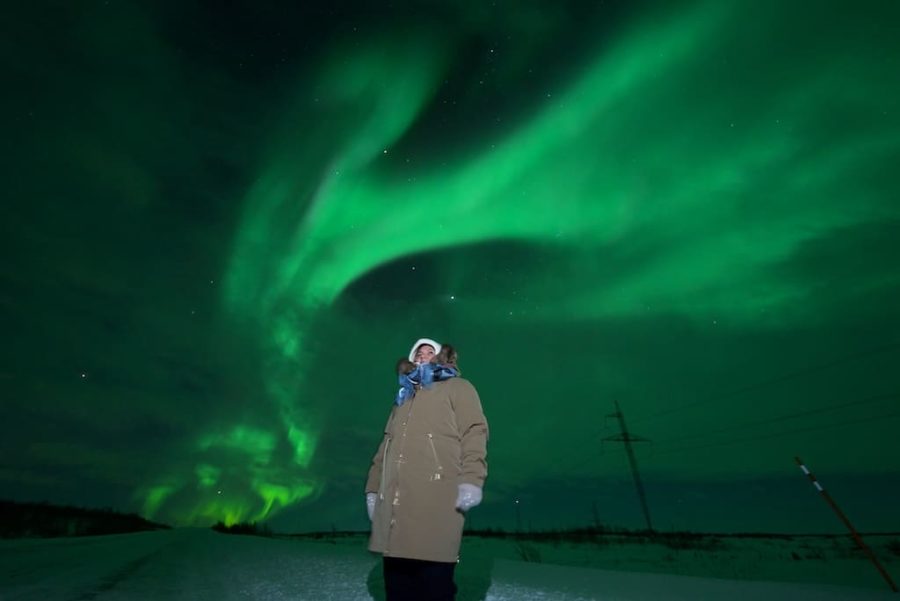
CHASE THE LIGHTS WITH VISIT TERIBERKA
Head beyond the city lights with our local team. We choose the route around the forecast and cloud cover.
We confirm availability before booking. Northern lights sightings depend on nature.
The auroral oval and four key indicators: solar wind speed, Bz, Kp and hemispheric power. They help assess near-term activity, but do not account for cloud cover or darkness.
The OVATION short-term forecast usually looks 30–90 minutes ahead. A brighter, broader oval indicates stronger auroral activity. Forecast lead time can vary.
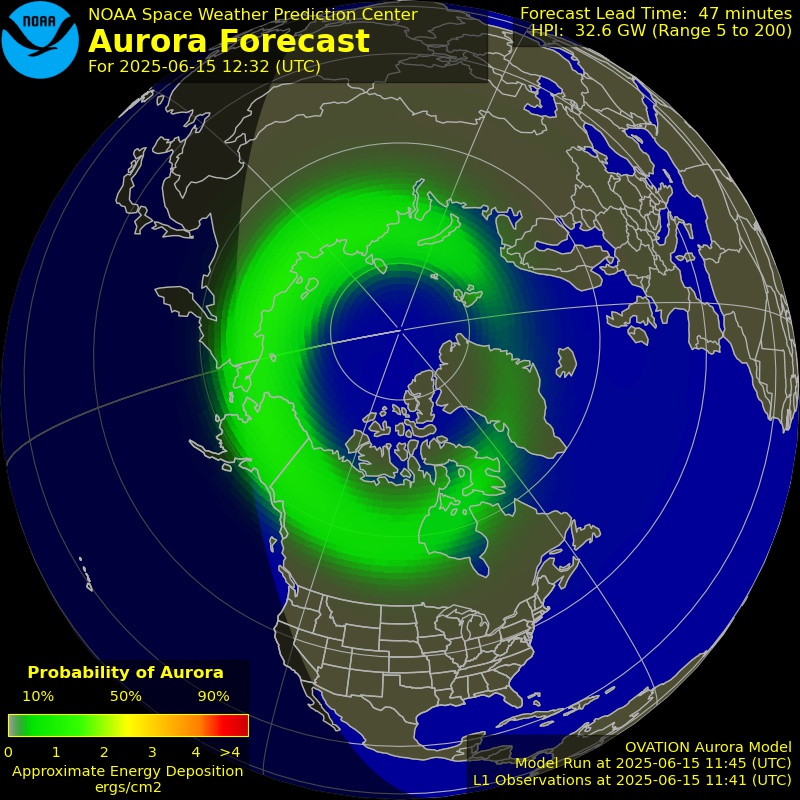 NOAA map · valid time is printed on the image
Higher solar wind speed and sustained negative Bz can support stronger auroral activity. They do not guarantee a visible display.
How to read it: look for rising speed together with Bz staying below zero over several readings, rather than a single spike.
Times: Murmansk (UTC+3). Each indicator shows its own timestamp.
NOAA’s estimate of global geomagnetic activity from recent observations, rather than the long-range outlook.
For Murmansk: aurora can be visible even at lower Kp because the city is close to the auroral oval. Rising Kp generally indicates a wider region of geomagnetic activity.
Estimated power deposited in the northern auroral oval, from NOAA’s OVATION model.
How to read it: follow the trend. A sustained increase means greater total auroral power; local visibility still depends on the oval’s position and the weather.
NOAA issue: 2026 Sep 07 0224 UTC. Predicted daily maximum Kp; UTC dates. Updating from the same NOAA source as the Russian page.

07 Sep
08 Sep
09 Sep
10 Sep
11 Sep
12 Sep
13 Sep
14 Sep
15 Sep
16 Sep
17 Sep
18 Sep
19 Sep
20 Sep
21 Sep
22 Sep
23 Sep
24 Sep
25 Sep
26 Sep
27 Sep
28 Sep
29 Sep
30 Sep
01 Oct
02 Oct
03 Oct
The bars show NOAA’s predicted daily maximum Kp, from 0 to 9. This is global geomagnetic activity, not your chance of seeing an aurora.
Use this weekly outlook for broad planning. For your evening, check clouds and the live conditions above.

Clear skies

Geomagnetic activity

Away from city lights
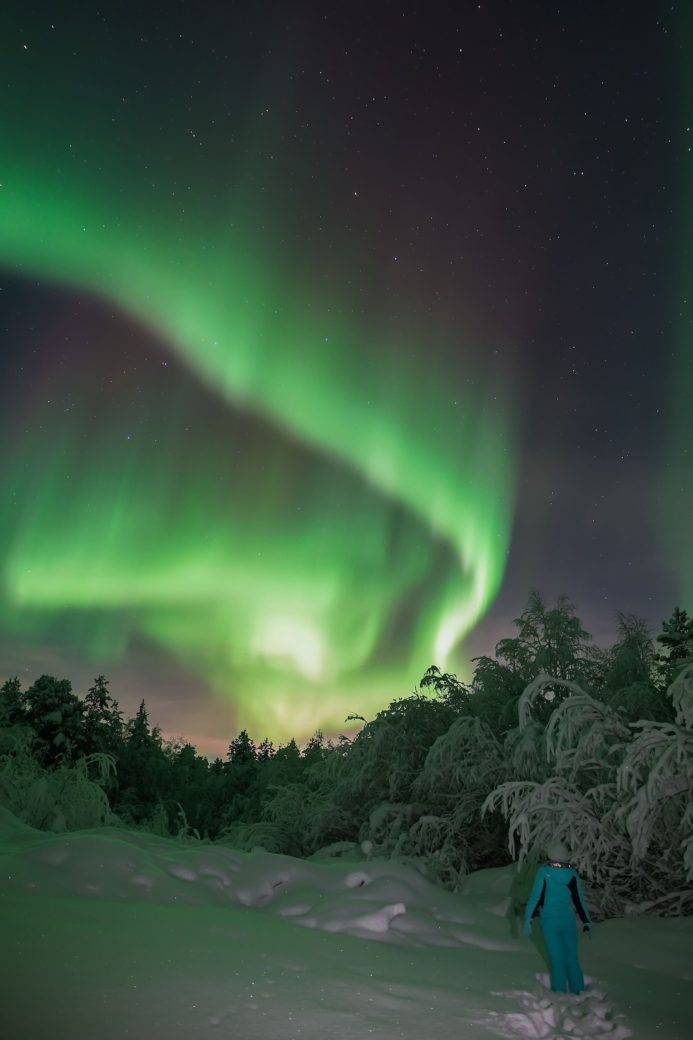
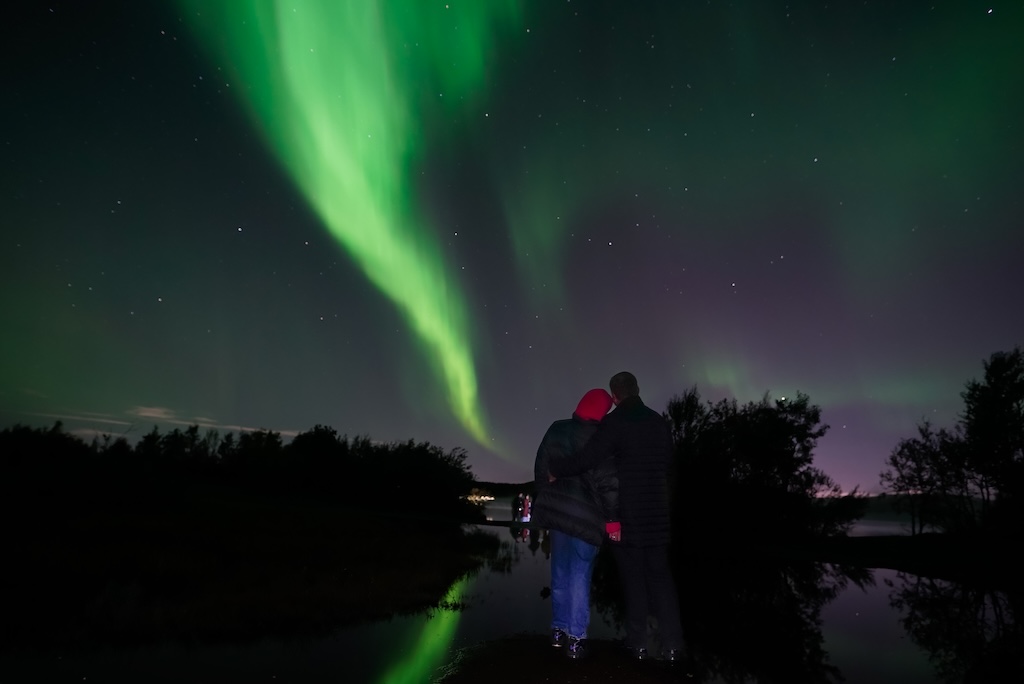
A glimpse of the northern lights from our photo library. Every night is different.
| Date (UTC) | Daily maximum Kp |
|---|---|
| 2026-09-07 | 4.0 |
| 2026-09-08 | 5.0 |
| 2026-09-09 | 3.0 |
| 2026-09-10 | 2.0 |
| 2026-09-11 | 2.0 |
| 2026-09-12 | 2.0 |
| 2026-09-13 | 2.0 |
| 2026-09-14 | 4.0 |
| 2026-09-15 | 4.0 |
| 2026-09-16 | 4.0 |
| 2026-09-17 | 2.0 |
| 2026-09-18 | 2.0 |
| 2026-09-19 | 2.0 |
| 2026-09-20 | 2.0 |
| 2026-09-21 | 2.0 |
| 2026-09-22 | 2.0 |
| 2026-09-23 | 2.0 |
| 2026-09-24 | 5.0 |
| 2026-09-25 | 5.0 |
| 2026-09-26 | 5.0 |
| 2026-09-27 | 4.0 |
| 2026-09-28 | 2.0 |
| 2026-09-29 | 2.0 |
| 2026-09-30 | 2.0 |
| 2026-10-01 | 2.0 |
| 2026-10-02 | 2.0 |
| 2026-10-03 | 2.0 |
Start with conditions on the ground, then check activity in space.
Consider several factors together. No single indicator guarantees a visible aurora.
There is no fixed threshold. Murmansk is close to the auroral oval, so aurora can be visible at lower Kp. Check the OVATION map, Bz, hemispheric power, darkness and cloud cover together.
OVATION usually provides a short-term guide around 30–90 minutes ahead, though the lead time can vary. The 27-day outlook is a broad planning guide and cannot predict visibility on a particular evening.
Cloud, polar daylight, light pollution or the oval’s position may prevent a sighting. Kp describes global geomagnetic activity, not the sky above a particular location.
They describe different things. Kp reflects global geomagnetic activity; sustained negative Bz can favour coupling between the solar wind and Earth’s magnetic field. Read them together.
Ask about an aurora-hunting outing for your dates. Sightings depend on conditions.